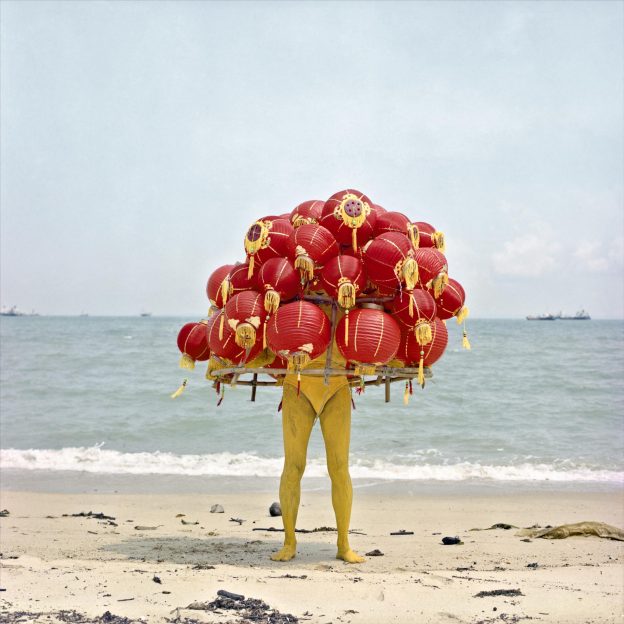
Born in 1957, Lee Wen was a Singaporean multidisciplinary artist working on social identity themes. After leaving a banking career to enroll at LASALLE College of the Arts, Lee graduated with a Masters of Fine Art in 2006. Best known for his Yellow Man series of work, Lee was one of the pioneers of Performance Art in Singapore.
Lee Wen relied on the strategic deployment of visual, kinesthetic symbols and signs in his works. Through various constructed personas, his works allowed visitors an insight into his roles as an artist. Lee had explored different strategies of time-based and performance art since 1989. Lee’s work had been strongly motivated by social investigations as well as inner psychological directions using art to interrogate stereotypical perceptions of culture and society.
Lee Wen’s essays, texts and investigations were an important reference, not only for Singaporean and Asian artists, but also for Performance art scholars and researchers worldwide.
Beyond his performance art, Lee was a multidisciplinary artist. To him, all his works irregardless of medium is about conveying a message to the audience by means of composing a picture, image or scene. Faced with the obstacle of battling with Parkinson’s disease, the artist’s body movements were increasingly limited, thus large paintings and drawings had become a feat to him. The gestures of marking and drawing lines across the blank spaces, the very act of painting and drawing was akin to a performance in itself. Despite these challenges, his two-dimensional works convey an overwhelming sense of optimism and perseverance.
Lee Wen was a contributing member in The Artists Village of Singapore and had been participating in Black Market international performance collective. Lee was also co-organiser of R.I.T.E.S. – Rooted in the Ephemeral Speak (2009), a platform to support and develop performance art practices, discourse, infrastructure and audiences in Singapore. In 2003, Lee spearheaded the Future of Imagination international performance art event, seeing the value of having an annual gathering of international artists in Singapore, to share a continuing interest in the cultural constructs of identity.
In 2005, Lee Wen was awarded the Cultural Medallion for his contributions to the development of Contemporary Art in Singapore and he also won the Joseph Balestier Award for the Freedom of Art in 2016. Lee Wen passed away in 2019.
Selected Solo Exhibitions
2015 | Lee Wen: Songs Unsung, iPreciation, Singapore
2014 | Lee Wen: Solo Exhibition, Art Basel Hong Kong
2013 | The Breath of a Blade, Jendela Visual Arts Space Esplanade, Singapore
2012 | Lee Wen: Lucid Dreams in the Reverie of the Real, Singapore Art Museum
Selected Group Exhibitions
2015 | The Cultural Medallion and Visual Arts 1979 – 2015, Nanyang Academy of Fine Arts, Singapore
2015 | 5th Asian Art Biennial, National Museum of Fine Arts, Taiwan
2015 | START Art Fair, Saatchi Gallery, London, UK
2015 | The Roving Eye, ARTER Foundation, Istanbul, Turkey
2015 | Prudential Singapore Eye, Art Science Museum, Singapore
Selected Public Collections
Singapore Art Museum
Fukuoka Asian Art Museum, Japan
Queensland Art Museum, Brisbane, Australia
For the full list of exhibitions and public collections, please contact the gallery atenquiry@ipreciation.com
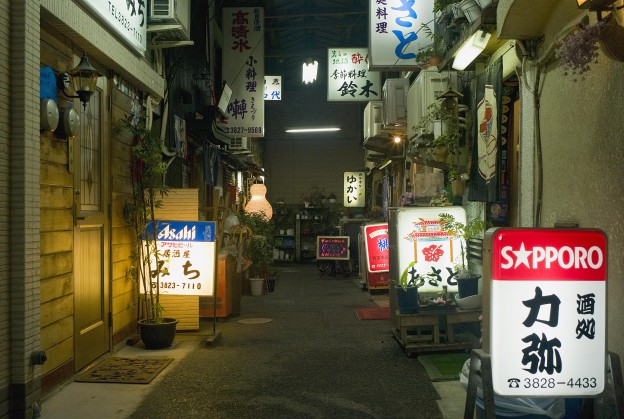
Kheng-li Wee works in photography but was trained as a painter with a degree in Swarthmore College, Pennsylvania and Master of Fine Art from San Francisco Art Institute, California. Fascinated by memory and dwelling as manifested in architecture and urban spaces, Wee navigates through ancient, narrow, old streets and neighborhoods. By using photography as a process of seeing and recording, Wee seeks to pose philosophical and existential questions regarding the possibilities of seeing beyond the limits of concept and language. His work allows the viewer to glance into the intimate stories and traces of nuances in everyday situations. Wee’s latest works are the LED light-box series which aims to capture the urban neighborhood of Yanaka in Tokyo, Japan. His other two LED light-box series encompass urban neighborhoods of Laweyan in Solo, Indonesia, and Cheung Chau in Hong Kong, S.A.R. Wee taught visual arts at Tunghai University in Taichung, Taiwan.
Selected Solo Exhibitions
2012 | In The Valley Is Silence, Littleton and Hennessy Asian Art, New York, USA
2010 | In The Valley Is Silence (Selected Images), San Francisco Art Institute, USA
2009 | Studies Of Daydreams, San Francisco Art Institute, USA
2008 | Chinatown Square, San Francisco Art Institute, USA
2006 | Istanbul, Art Forum Gallery, Singapore
2005 | On The Silk Road, Art Forum Gallery, Singapore
2004 | Zen City, Art Forum Gallery, Singapore
2002 | Views Of A City, Art Forum Gallery / MICA Atrium, Singapore
1992 | Graduate Solo Exhibition, Swarthmore College, Pennsylvania, USA
Selected Group Exhibitions
2015 | NOW, iPreciation, Singapore
2015 | Portable Art Week, iPreciation, Singapore
2010 | Vernissage: MFA Graduate Exhibition, Fort Mason, San Francisco, USA
2010 | (Extra) Ordinary World, Swell Gallery, San Francisco Art Institute, USA
2009 | Cont.MFA, Diego Rivera Gallery, San Francisco Art Institute, USA
2008 | The Varied Life Of People Of The Asian City, Fujifilm Square, Tokyo, Japan
2006 | Every Sandplay, Club Family, Tokyo, Japan
2004 | Popular Pleasures Through Photography, The Substation, Singapore
2002 | The Month Of Photography, MICA Atrium, Singapore
2001 | New Messenger, Gallery, Evason Hotel, Singapore
2000 | ICP Graduate Exhibition, Chelsea Fine Arts Building, New York, USA
Undoubtedly, Milenko Prvacki is one of Singapore’s most influential contemporary artists and educators. Moreover, he has made a significant impact through both his paintings and his leadership in art education. As a result, his practice blends European training with Southeast Asian cultural perspectives. Therefore, his work continues to resonate across generations of artists and collectors alike.
Early Life and European Training
Initially, Milenko was born in 1951 in the former Yugoslavia. Subsequently, he pursued formal training at the Institutul de Arte Plastice “Nicolae Grigorescu” in Bucharest, Romania, where he completed his Master of Fine Arts in Painting. During this period, he held several solo exhibitions, which helped him develop both discipline and confidence in his artistic voice.
Furthermore, this European foundation enriched his understanding of colour, form, and composition. Consequently, it later provided a platform for his experimentation in abstraction. Importantly, these early experiences shaped his lifelong approach to visual expression.
Move to Singapore and Teaching Career
In 1991, Milenko moved to Singapore during a time of political unrest in his home country. Shortly thereafter, he joined LASALLE College of the Arts. At first, he served as a senior lecturer, but over time, he became Dean of the Faculty of Fine Arts.
Additionally, he currently holds the position of Senior Fellow. Through these roles, he introduced innovative approaches to teaching that emphasised critical thinking, experimentation, and cross-cultural engagement. Therefore, his influence extends far beyond his own artwork to the next generation of Southeast Asian artists.
Artistic Style and Themes
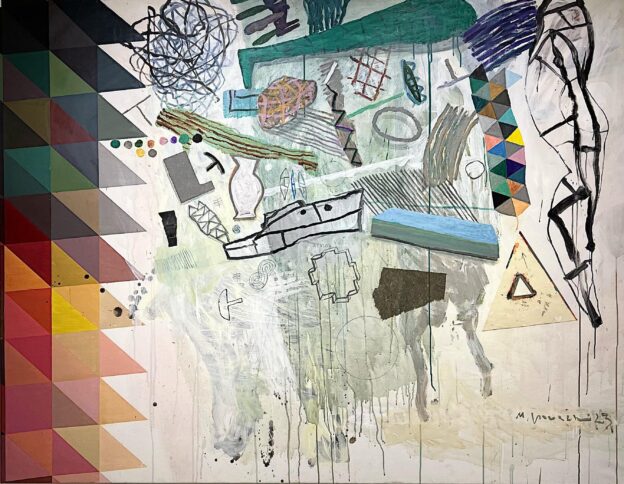
Primarily, Milenko’s paintings are known for their vibrant use of colour, layered forms, and dynamic compositions. Moreover, his works navigate the intersection between abstraction and geometry, balancing formal structure with expressive freedom. Consequently, viewers are invited to explore both emotional resonance and intellectual interpretation.
Furthermore, his art often reflects cultural synthesis, blending European influences with Southeast Asian sensibilities. As a result, his paintings offer a nuanced perspective on identity, memory, and place. In particular, this dialogue between form and meaning characterises much of his oeuvre.
Exhibitions and International Presence
Throughout his career, Milenko has exhibited extensively across Asia, Europe, and beyond. For example, he held solo exhibitions in Belgrade, Sydney, and Jakarta. Moreover, his show Abstraction for Beginners at iPreciation Gallery in Singapore highlighted his continued engagement with local audiences.
In addition, major retrospectives, including Milenko Prvacki: A Survey 1979–2012, reinforced his long-term contribution to art discourse. As a result, his work is held in prominent collections such as the Singapore Art Museum, National Gallery Singapore, and Art Gallery of New South Wales. Therefore, his influence is both local and international.
Awards and Recognition
Significantly, Milenko has received numerous honours throughout his career. For instance, in 2011, he was awarded the Chevalier de l’Ordre des Arts et des Lettres by the French government. Moreover, Singapore’s National Arts Council awarded him the Cultural Medallion for Visual Arts in 2012.
Additionally, his work as an educator and mentor has shaped countless artists in Southeast Asia. Consequently, his recognition reflects both artistic excellence and lasting educational impact.
Legacy and Influence
Importantly, Milenko’s contributions extend beyond painting. Through founding initiatives such as Tropical Lab, an international postgraduate art programme, he has fostered cross-cultural artistic exchange. Moreover, his mentorship at LASALLE College of the Arts has nurtured a generation of contemporary artists.
Therefore, his legacy lies not only in his artworks but also in the communities he has shaped. As a result, Milenko continues to be a seminal figure in Singapore’s contemporary art landscape.
Summary
In summary, Milenko Prvacki’s practice exemplifies the integration of European training, Southeast Asian experience, and a commitment to education. Moreover, his work demonstrates how abstraction, colour, and form can engage audiences on multiple levels. Consequently, he remains a defining figure in both Singaporean and international contemporary art.
Education
1975 | Master of Fine Arts (Painting), Institute of Fine Arts, Bucharest, Romania
Selected Solo Exhibitions
2019 | Abstraction for Beginners, HAOS Gallery, Belgrade, Serbia
2015 | Milenko Prvacki: E La Nave Va (and the ship sails on), iPreciation, Singapore
2014 | Johor Strait, Bergamont Station Art Centre, Santa Monica, California, USA
2012 | Milenko Prvacki: A Survey 1979 – 2012 (curated by Charles Merewether), Institute of Contemporary Art, Singapore
2012 | Remembrance of Things Past, iPreciation, Hong Kong
2007 | Recollection, Taksu Gallery, Singapore
2006 | Construction Site, Museum of Contemporary Art, Sydney, Australia
NUS Museum, National University of Singapore, Singapore
And many other private and public collections throughout Southeast Asia and Europe. For full list of exhibitions and collections, please contact the gallery atenquiry@ipreciation.com
Tang Da Wu 唐大霧 was born in 1943 in Singapore, the eldest of four sons in the family. He received a BA in sculpture from the School of Fine Art, Birmingham Polytechnic (now Birmingham Institute of Art and Design) in 1974 and pursued advanced studies in sculpture at Saint Martins School of Art (now Central Saint Martins) from 1974–75. In 1985, he received an MFA from Goldsmith’s College, University of London. After returning to Singapore in 1979, Tang began to work in performance art, and in 1988, cofounded the Artists Village, a collective committed to promoting experimental art through the provision of studio and exhibition space. Working through a de facto ban on performance that began in 1994 as a response to artist Josef Ng trimming his pubic hair at a public festival, the organization supports community interaction through social relevance and the hosting of public site-specific interventions. Through performance, installation, painting, and drawing, Tang explores social and environmental themes including deforestation, animal endangerment, and urban transformation.
Tang was the founder of Singapore’s seminal The Artists Village and is a prominent Southeast Asian performance artist; he is amongst the most distinguished figures of contemporary art in Singapore. Contemplating his own identity as a Chinese Singaporean, Tang uses a broad array of media with local references and iconography to engage in his performance art. Tang’s works have been performed and shown in countries such as England, Japan, Germany, Australia, Philippines, Malaysia and Indonesia, making him acknowledged as the most representative contemporary artist in Southeast Asia today.
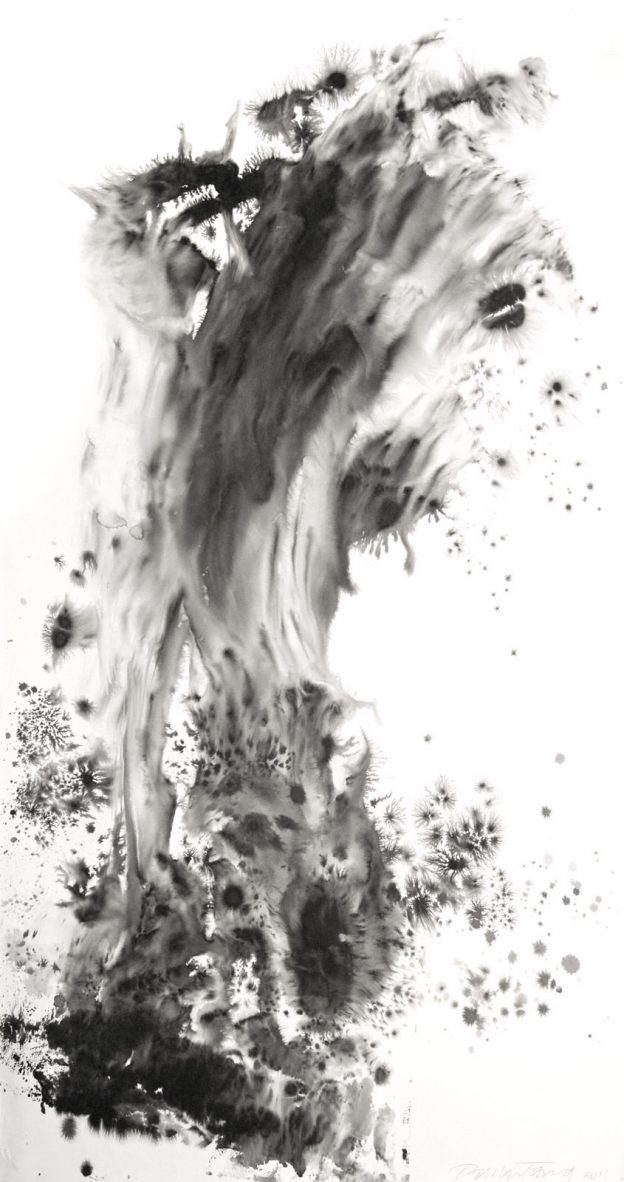
Tang is recognised for his works in sculpture, installation and performance art, his paintings narrate countenances with a spatial sense of ambiguity; demonstrating that Chinese ink painting is more than an archaic medium confined to still-life and landscape. Present in Tang’s ink paintings is a persistent exploration of motion and energy, poignantly and dynamically achieved through transcendence with the mediums of ink, water and paper. The ink in his works bleeds into one another, their varying hues forming intense monochromatic silhouettes that depict a partial and allusive picture of a feeling that the viewer is invited to respond with.
Tang was the recipient of the Visual Arts Award from the Arts Council of Great Britain in 1978, as well as the Artist Award from the Greater London Arts Council in 1983. In 1999, he was awarded the 10th Fukuoka Asian Culture Prize in Arts and Culture.
He has had solo exhibitions at ACME Gallery, London (1978), National Museum Art Gallery, Singapore (1980), Your Mother Gallery, Singapore (2005), Valentine Willie Fine Art, Kuala Lumpur (2006), and Goodman Arts Centre, Singapore (2011). Important performances include Five Days at NAFA and Five Days in Museum, Nanyang Academy of Fine Arts and National Museum, Singapore (1982), They Poach the Rhino, Chop Off His Horn and Make This Drink, National Museum Art Gallery, National University of Singapore, and Singapore Zoo (1989), and Don’t Give Money to the Arts, Singapore Art exhibition and fair (1995). He was a leading organizer of and participant in the Artists Village’s Dancing by the Ponds and Sunrise at the Vegetable Farm, The Time Show—24 Hours Continuous Performance (1989–90). The group and its activities were celebrated in the retrospective The Artists Village: 20 Years On at the Singapore Art Museum (2008).
Tang has participated in group exhibitions including the Asian Art Show, Fukuoka Art Museum, Japan (1989), Art in Asia: Traditions/Tensions, Art Gallery of Western Australia, Perth (1998), Fukuoka Asian Art Triennial (1999), and Singapore Biennial (2006). He was featured in the Singapore Pavilion at the 52nd edition of the Venice Biennale in 2007. More recently in 2014, Tang’s sculpture was presented at the Guggenheim UBS Map Global Art Initiative, curated by Singaporean curator June Yap and exhibited at NTU Centre for Contemporary Arts in Gillman Barracks, Singapore. The work “Our Children, 2012” was acquired by the Guggenheim Museum, New York. Tang currently lives and works between Singapore and London.
Selected Exhibitions and Performances
1970 : Drawings and Paintings, Chinese Chamber of Commerce, Singapore
1972 : Touch Space, Midland Art 72, Dudley Museum, England
1978 : Marks – Black Powder Falling Through Muslin, ACME Gallery, England
1980 : Earthworks, National Museum Art Gallery and Sin Chew Jit Poh Exhibition Centre, Singapore
1982 : Five Days at NAFA; Five Days in Museum, Nanyang Academy of Fine Arts and National Museum, Singapore
1983 : Flying Marks, ALTERNATIVA III Festival of Performance, Portugal
1983 : In Between; Change, 4th Performance Platform, England
1984 : The 1984 Show, Brixton Art Gallery, England
1984 : Every Other Move, Oporto, Portugal
1985 : The Support, Woodland Gallery, England
1985 : Steaming Laundry, Brixton Art Gallery, England
1986 : No Fancy Brushes; New Life, Royal Festival Hall, England
1986 : In The End, My Mother Decided to Eat Dogfood and Catfood, Orchard Road Weekend Art Fair, Singapore
1987 : Four Days at the National Museum Art Gallery, National Museum, Singapore
1988 : In Case of Howard Lui; Incident in a City, Singapore Festival of the Arts Fringe, Singapore
1989 : The Artists Village Show Home Documentation, Art Base Gallery, Singapore
1989 : Gooseman; Open the Gate; Dancing UV; Selling Handicaps; In the End, My Mother Decided to Eat Dogfood and Catfood, The Artists’ Village 2nd Open Studio Show, Singapore
1989 : They Poach the Rhino, Chop Off His Horn and Make this Drink, National Museum Art Gallery, National University of Singapore, Singapore Zoo, Singapore
1989 : The Third Asian Art Show, Fukuoka Art Museum, Japan
1989 – 1990 : Dancing by the Ponds;Sunrise at the Vegetable Farm; The Time Show – 24 Hours Continuous Performance Show, The Artists’ Village, Singapore
1990 : The Death of the Philipino Maid, Stop That Tank One Year Anniversary of June 4th,Noah’s Ark for Plants, Serious Conversations, Festival of the Arts Fringe, Singapore
1990 : T or P? That is the Question, Empress Place Museum, Singapore
1990 – 1999 : North-East Monsoon – A Water Game, Singapore and Others
1991 : Tiger’s Whip, National Museum and Chinatown, Singapore; and Fukuoka Art Museum, Japan
1991 : Four Persons in One Suit, in the Streets of Singapore, A Sculpture Seminar, National Museum, Singapore
1991 : The Ark for Plants, The Substation, Singapore
1991 : Chinese Restaurant II; World’s Number One Pet Shop; Just in Case, National Sculpture Exhibition, National Museum, Singapore
1991 : Switch Off the Lights, Please, The Substation, Singapore
1991 : They Poach the Rhino, Chop Off His Horn and Make This Drink; In the End, My Mother Decided to Eat Dogfood and Catfood; and Tigers Whip, Asian Artist Today – Fukuoka Annual V: Tang Da Wu Exhibition, Fukuoka Art Museum, Japan
1992 : Under The Table All Going One Direction, New Art From Southeast Asia 1992, Tokyo Metropolitan Artspace / Fukuoka Art Museum/ Hiroshima City Museum of Contemporary Art/ Kirin Plaza Osaka, Japan
1993 : And He Returns Home When You Least Expected, 2nd ASEAN Workshop, Exhibition and Symposium on Aesthetics, Philippines
1994 : Sorry Whale I Didn’t Know That You Were In My Camera, Creativity in Asian Art Now, Part 3 Asian Installation Work, Hiroshima City Museum of Contemporary Art, Japan
1994 : Contemporary Shopping, Faret Tachikawa, Japan
1994 – 1995 : Tapioca Friendship Project, Osaka International Peace Centre, Japan and Singapore
1994 : Colours Don’t Help, Artists Against AIDS, Singapore
1995 : Meeting with the Real Chiang Maian, 3rd Chiang Mai Social Installation, Thailand
1995 : I was Born Japanese, Mokosongo, Indonesia
1995 : Don’t Buy Present for Your Mother on Mother’s Day, The Substation, Singapore
1995 : Don’t Give Money To The Arts, Asian International Art Exhibition, National Museum Art Gallery and Singapore Art ’95, Suntec City, Singapore
1996 : One Hand Prayer Project, Hiroshima City Museum of Contemporary Art, Japan
1996 : Life in a Tin; Rubber Road No U-Turn, Malaysia, Singapore and others
1998 : Contemporary Art in Asia: Traditions/Tensions, Art Gallery of Western Australia, Australia
1999 : Don’t Worry Ancestors, Singapore
1999 : Life in a Tin, The First Fukuoka Asian Art Triennale, Fukuoka Asian Art Museum, Japan
2000 : Tapioca Friendship, Kwanju Biennale, Korea
2004 : Satsuma Brilliance, Kirishima Open Air Museum, Japan
2004 : Interakcje, Trybunalski, Poland
2005 : Art Brickfest, Wheelock Place, Singapore
2005 : Situation: Collaborations, collectives and artist networks from Sydney, Singapore and Berlin, Museum of Contemporary Art Sydney, New South Wales
2006 : Tang Da Wu – Heroes, Islanders, Valentine Willie Fine Art, Singapore
2006 : Indonesian International Performance Art Event, Galeri Nasional Indonesia, Jakarta
2006 : Jantung Pisang – Heart of a Tree, Heart of a People, Jendela Visual Arts Space at The Esplanade, Singapore
2007 : Untitled, Singapore Pavilion at the 52nd Venice Biennale International Art Exhibition, Italy
2012 : The Artists Congresses: A Congress, dOCUMENTA 13, Germany
2012 : Intersecting Histories – Contemporary Turns in Southeast Asian Art, ADM Gallery, Singapore
2012 : Detour – Visual Art Staff Show, NIE Art Gallery, Singapore
2013 : Situationist Bon Gun, The Institute of Contemporary Arts Singapore (ICAS)
For the full list of exhibitions, please get in touch with the gallery atenquiry@ipreciation.com
Awards
1994 : Singapore International Foundation Art Grant
1995 : Japanese Chamber of Commerce and Industry Foundation Prize
1999 : Arts and Culture Prize, 10th Fukuoka Asian Culture Prizes
Artwork Images
Copyright iPRECIATION.COM 2026. All Rights Reserved
We value your privacy
We use cookies to enhance your experience and understand how our website is used. You may accept all cookies, reject non-essential cookies, or customise your preferences at any time.
Essential
Always active
The technical storage or access is strictly necessary for the legitimate purpose of enabling the use of a specific service explicitly requested by the subscriber or user, or for the sole purpose of carrying out the transmission of a communication over an electronic communications network.
Preferences
These cookies allow the website to remember choices you make, such as language or display preferences, to provide a more personalised experience.
Analytics
The technical storage or access that is used exclusively for statistical purposes.The technical storage or access that is used exclusively for anonymous statistical purposes. Without a subpoena, voluntary compliance on the part of your Internet Service Provider, or additional records from a third party, information stored or retrieved for this purpose alone cannot usually be used to identify you.
Marketing
These cookies may be used to deliver relevant content and advertisements, and to measure the effectiveness of our communications.