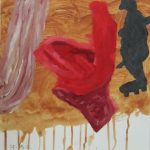
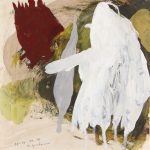
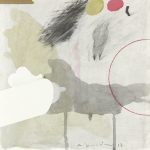
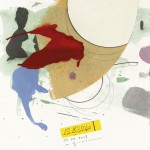
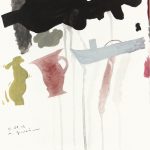
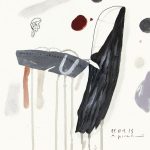
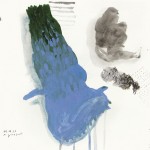
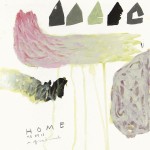
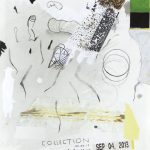
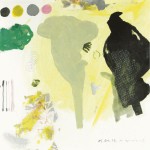
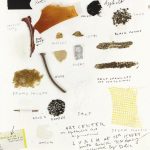
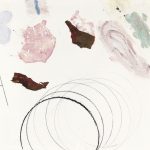
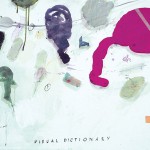
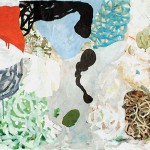
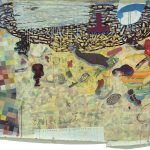
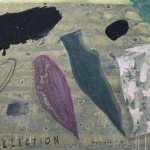
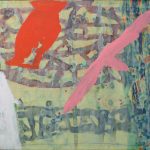
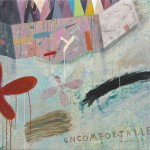
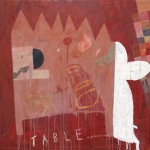
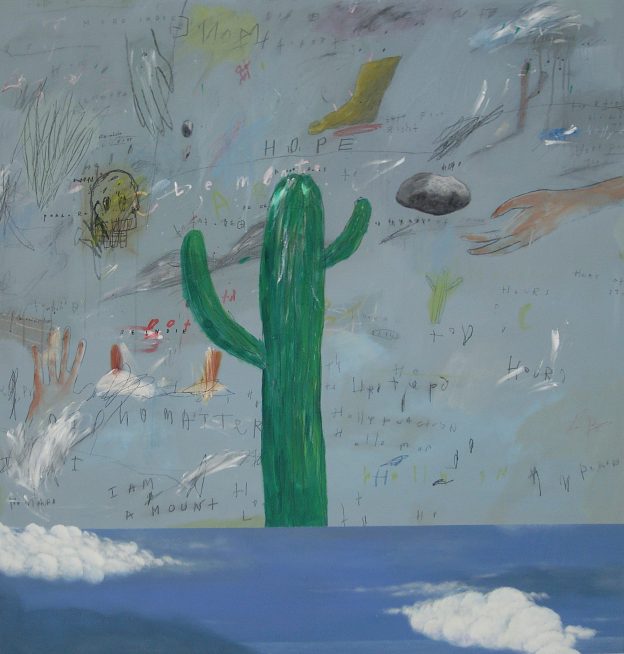
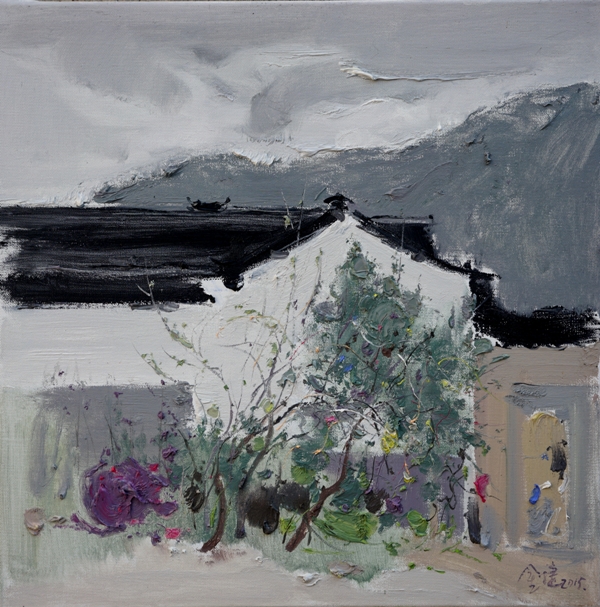
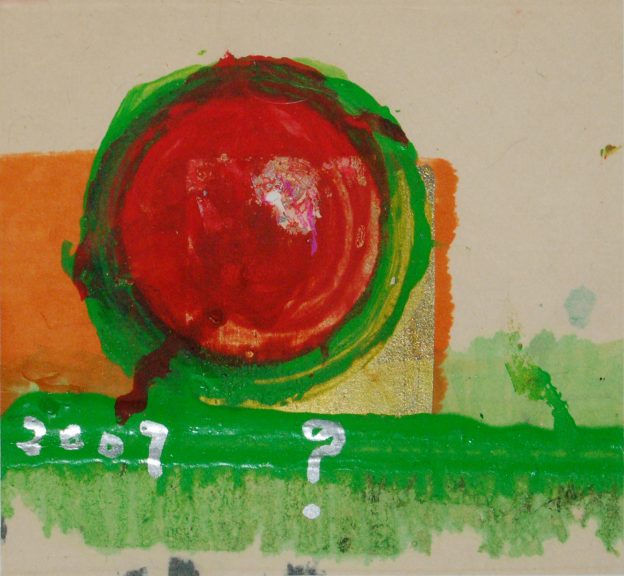
Alfi Jumaldi was born 1972 in Lintau, West Sumatra, Indonesia. After studying at the Indonesian Institute of Arts in Yogyakarta in 1999, he co-founded and became a member of Jendela Art Group, a prominent contemporary artist collective. Most of the members were experiencing the early phase of their careers, creating work which surprised art audiences in Indonesia as the subject matter were far removed from socio-political themes and realistic painting. Instead, the Jendala Art Group showed inclination for extreme naïvism in the form of meaningless ‘doodles’ or formalism – that was also extreme – by drawing exclusively on minimal visual elements of line, color and texture. In 2010, he co-founded the Artists Collective, Office: For Contemporary Art International in Yogyakarta, Indonesia. He lives and works in Yogyakarta, Indonesia.
Alfi Jumaldi was nominated for the 10th Indonesian Art Awards (2003, Finalist) and the 5th Indonesian Art Awards, The Best Painting Awards, Indonesian Insitute of Art (ISI), Yogyakarta, Indonesia (1998, Finalist). He currently lives and works in Yogyakarta, Indonesia.
Education
1999 | Graduated from FSR Institut Seni Indonesia Yogyakarta, Indonesia
1993 | Graduated from SMSR Yogyakarta, Indonesia
Selected Solo Exhibitions
2016 | Jumaldi Alfi, Sanata Dharma University Gallery, Yogyakarta, Indonesia
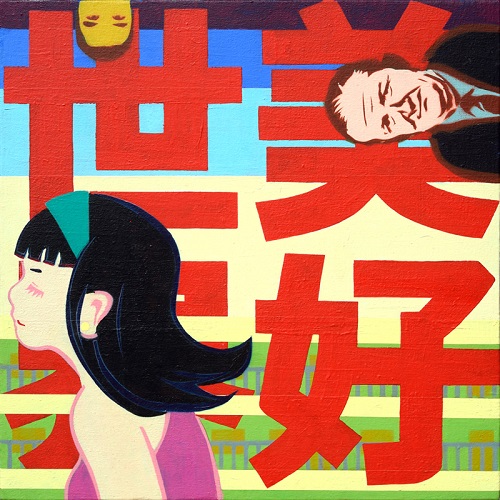
Born in 1974, Hong Kong, Tse Yim On 謝炎安 grew up in the Generation X era and was heavily influenced by the rise of titillating, pseudo-violent cartoons, especially the heavily caricatured style of Japanese anime. His art is satirical and wildly fantastic, using a highly coloured lens filled with cartoon visuals and pop culture aesthetics.
What is most notable is Tse’s striking insight overlaid by a keen and witty sense of humour, almost parallel to Warhol’s Pop Art. Unlike other conceptual or popular culture artists, his artistic techniques remain assured and meticulously detailed. However, Tse’s real strength lies in his undeniable relevance even in today’s fast-changing world and his individualistic contributions to the face of contemporary culture. His paintings are vibrant and command attention. Once drawn to his paintings, it is hard not to be complicit in deciphering the messages behind his works, bringing into hearts and minds of its viewers its captivating elements.
Tse Yim On acquired his Bachelor’s and Master’s degrees in Fine Arts from the Chinese University of Hong Kong. In 1998, he was awarded the “Hong Kong Urban Council Fine art Award”. He has participated extensively in various art exhibitions, especially those staged to illustrate existing social issues. Tse has been an advisor to the Hong Kong Arts Development Council since 2002. His work has been increasingly sought after and collected by the Hong Kong Museum of Art and private collectors.
Selected Solo Exhibitions
2018 | Wonderful World of Color by Tse Yim On, Gallery by the Harbour, Harbour City, Hong Kong
2013 | Flaneur, iPreciation, Singapore
2012 | Mongkok Library, iPreciation, Hong Kong
2010 | Great Righteousness Resolving Confusion, iPreciation Hong Kong
2003 | I have a Beautiful World Because I Love You, Para/site, Hong Kong
1998 | Perusing Culture, Para/site, Hong Kong
Selected Group Exhibitions
2019 | Together We March Forward: New Asia 70th Anniversary Art Exhibition, Hart Hall, H Queen’s, Hong Kong
2019 | Under the Bridge Art Project: Once Upon a Lychee, Mei Foo Bus Terminus, Hong Kong
2018 | Art New York 2018, Pier 94, New York, USA
2017 | Evolving Images: Modern Hong Kong Printmaking, 17, Sun Museum, Hong Kong SAR, China
2016 | From Longing to Belonging, CMC Gallery, Hong Kong SAR, China
2016 | Portable Art Week 2016, iPreciation, Singapore
2015 | Art Paris, Grand Palais, Avenue Winston Churchill, Paris
2014 | From Longing to Belonging, Laznia Centre for Contemporary Art, Poland
2012 | Painting On and On, Southsite, Hong Kong
2012 | Four Symbols – Eight Faces, iPreciation, Hong Kong
2011 | Octopus – Nine Contemporary Artists from Hong Kong, Hanina Contemporary Art, Tel Aviv, Israel
2010 | You are Here, I am Not, Osage Kwun Tong, Hong Kong
2009 | Blindness & Insight, The Rotunda Exchange Square, Hong Kong
2008 | CHiE!, Osage Kwun Tong, Hong Kong
2005 | Excursion to the readings, Para/site, Hong Kong
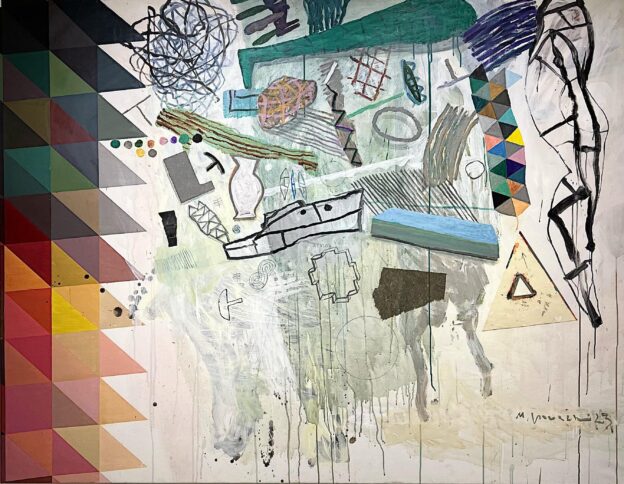
Undoubtedly, Milenko Prvacki is one of Singapore’s most influential contemporary artists and educators. Moreover, he has made a significant impact through both his paintings and his leadership in art education. As a result, his practice blends European training with Southeast Asian cultural perspectives. Therefore, his work continues to resonate across generations of artists and collectors alike.
Early Life and European Training
Initially, Milenko was born in 1951 in the former Yugoslavia. Subsequently, he pursued formal training at the Institutul de Arte Plastice “Nicolae Grigorescu” in Bucharest, Romania, where he completed his Master of Fine Arts in Painting. During this period, he held several solo exhibitions, which helped him develop both discipline and confidence in his artistic voice.
Furthermore, this European foundation enriched his understanding of colour, form, and composition. Consequently, it later provided a platform for his experimentation in abstraction. Importantly, these early experiences shaped his lifelong approach to visual expression.
Move to Singapore and Teaching Career
In 1991, Milenko moved to Singapore during a time of political unrest in his home country. Shortly thereafter, he joined LASALLE College of the Arts. At first, he served as a senior lecturer, but over time, he became Dean of the Faculty of Fine Arts.
Additionally, he currently holds the position of Senior Fellow. Through these roles, he introduced innovative approaches to teaching that emphasised critical thinking, experimentation, and cross-cultural engagement. Therefore, his influence extends far beyond his own artwork to the next generation of Southeast Asian artists.
Artistic Style and Themes
Primarily, Milenko’s paintings are known for their vibrant use of colour, layered forms, and dynamic compositions. Moreover, his works navigate the intersection between abstraction and geometry, balancing formal structure with expressive freedom. Consequently, viewers are invited to explore both emotional resonance and intellectual interpretation.
Furthermore, his art often reflects cultural synthesis, blending European influences with Southeast Asian sensibilities. As a result, his paintings offer a nuanced perspective on identity, memory, and place. In particular, this dialogue between form and meaning characterises much of his oeuvre.
Exhibitions and International Presence
Throughout his career, Milenko has exhibited extensively across Asia, Europe, and beyond. For example, he held solo exhibitions in Belgrade, Sydney, and Jakarta. Moreover, his show Abstraction for Beginners at iPreciation Gallery in Singapore highlighted his continued engagement with local audiences.
In addition, major retrospectives, including Milenko Prvacki: A Survey 1979–2012, reinforced his long-term contribution to art discourse. As a result, his work is held in prominent collections such as the Singapore Art Museum, National Gallery Singapore, and Art Gallery of New South Wales. Therefore, his influence is both local and international.
Awards and Recognition
Significantly, Milenko has received numerous honours throughout his career. For instance, in 2011, he was awarded the Chevalier de l’Ordre des Arts et des Lettres by the French government. Moreover, Singapore’s National Arts Council awarded him the Cultural Medallion for Visual Arts in 2012.
Additionally, his work as an educator and mentor has shaped countless artists in Southeast Asia. Consequently, his recognition reflects both artistic excellence and lasting educational impact.
Legacy and Influence
Importantly, Milenko’s contributions extend beyond painting. Through founding initiatives such as Tropical Lab, an international postgraduate art programme, he has fostered cross-cultural artistic exchange. Moreover, his mentorship at LASALLE College of the Arts has nurtured a generation of contemporary artists.
Therefore, his legacy lies not only in his artworks but also in the communities he has shaped. As a result, Milenko continues to be a seminal figure in Singapore’s contemporary art landscape.
Summary
In summary, Milenko Prvacki’s practice exemplifies the integration of European training, Southeast Asian experience, and a commitment to education. Moreover, his work demonstrates how abstraction, colour, and form can engage audiences on multiple levels. Consequently, he remains a defining figure in both Singaporean and international contemporary art.
Education
1975 | Master of Fine Arts (Painting), Institute of Fine Arts, Bucharest, Romania
Selected Solo Exhibitions
2019 | Abstraction for Beginners, HAOS Gallery, Belgrade, Serbia
2015 | Milenko Prvacki: E La Nave Va (and the ship sails on), iPreciation, Singapore
2014 | Johor Strait, Bergamont Station Art Centre, Santa Monica, California, USA
2012 | Milenko Prvacki: A Survey 1979 – 2012 (curated by Charles Merewether), Institute of Contemporary Art, Singapore
2012 | Remembrance of Things Past, iPreciation, Hong Kong
2007 | Recollection, Taksu Gallery, Singapore
2006 | Construction Site, Museum of Contemporary Art, Sydney, Australia
NUS Museum, National University of Singapore, Singapore
And many other private and public collections throughout Southeast Asia and Europe. For full list of exhibitions and collections, please contact the gallery at[email protected]
Ye Jian Qing 葉劍青 is an example of an artist who has redefined what it means to make contemporary art; retaining the aesthetic and philosophical heritage of Chinese cultural influences while displaying an individualistic creative identity. Born in Zhejiang Province, China, Ye is a well established artist, having won acclaim from critics and collectors alike. After getting his Master’s Degree and PhD from the Beijing Central Academy of Art (CAFA), he now teaches at the Fresco Department in CAFA.
In a bold and valuable return to subtle yet intellectually stimulating works, Ye draws on the refined approach of traditional Chinese painting and fuses it with modern sensibilities. His oil on canvas depictions of land and cityscapes are unique in both concept and perspective, expressed in an almost dream-like manner to trigger emotional and philosophical responses amongst his viewers. Ye’s work is fluid and moving; relying on dusky hues and diaphanous textures to evoke a sense of deep poeticism and yearning for a past which is rapidly fading. The emotive quality of his work turns the muted canvas into a metaphor for cultural and artistic reflection.
A recognizable theme of Ye’s works is the image of Hutongs, the traditional winding alleyways of China which connect the courtyards of ancient houses. Hutongs are deeply ingrained into the psyche of city inhabitants, being the backdrop of daily life, historical and social change. However they are gradually being eroded by encroaching urbanization and Ye’s softly blurred images are permeated by a sense of pursuing vanishing moments.
Ye’s paintings capture present-day China in a way which is rarely seen, as a product of its rich cultural and historical past ceding to a bustling metropolis, an anomaly which will soon vanish and leave its traces only on the canvas of progressive visionaries like himself.
Selected Solo Exhibitions
Rain Rhythms, New Works by Ye Jianqing, 2012, iPreciation, Singapore
Ye Jianqing – Reflections of the Mind, 2010, National Art Museum of China, Beijing, China
Hutong Memory: A Solo Exhibition, 2009, iPreciation, Hong Kong
Ye Jianqing, 2007, The Rotunda, Exchange Square Central, Hong Kong
Born in Guangzhou, China in 1949, Szeto Lap took up residence in Hong Kong at the age of 23, a prelude to a move to France three years later in 1975. A young, budding Chinese artist in Europe, Szeto won recognition by staging his first solo exhibition at the Galerie l’Oeil Sévigné in Paris. He has since embarked on various educational projects, acting as Guest Professor to renowned art institutions in China, and was also Lecturer of the PhD programme at the China Academy of Art in Hangzhou in 2001.
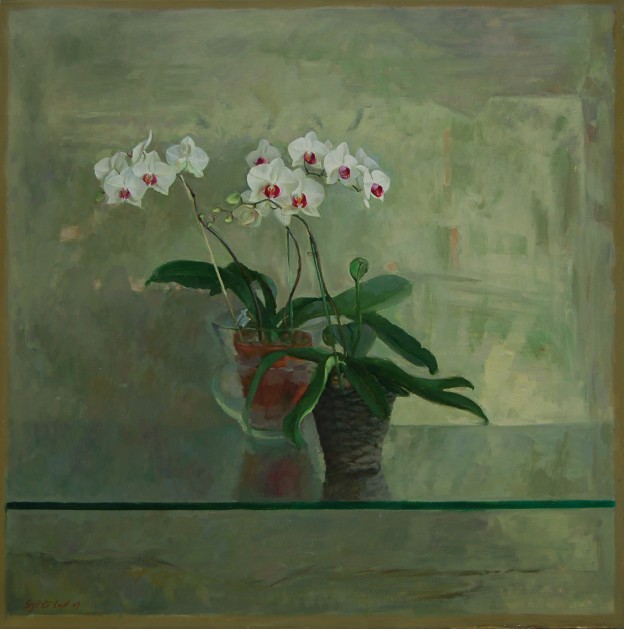
Szeto Lap is an artist who revels in simplicity, providing a sense of calm and introspection through his oil paintings, conferring sensibility to a society that is warped by a multitude of complexities. Never ceasing in his pursuit and perusal of beauty, he charts details meticulously. The objects in his paintings espouse a mysterious quality and are thought-provoking owing to the premeditated play of shadows. Szeto’s philosophical approach to life attests to the quietude and composure in his paintings, advocating the precepts of truth and knowledge, with elements metamorphosed as filters of light in his creations.
Forsaking the common desire to climb the social ladder, the artist, relishing this nonconformist adoption, has gained rare insights to the callous materialistic attributes plaguing city life, deviating entirely from such heady, disillusioned affairs, thus achieving artistic enlightenment through his paintings with a psychological eminence that induces admiration.
Selected Exhibitions
1979 – 2003, Exhibitions at Galerie l’Oeil Sévigné (Paris, France), Galeria Claude Bernard (Paris, France), Galerie Jacques Elbaz (Paris, France), Barentin Museum (Taipei, Taiwan), Galerie Elegance (Taipei, Taiwan), 亚洲艺术中心 (Taipei, Taiwan), Marlborough Fine Art Gallery (London, UK), Kwai Fung Hin Art Gallery (Hong Kong, China), Galerie Sepia (Paris, France), etc.
1980, Grand Palais Water Color Exhibition (Paris, France)
1981, Lubiam Prize (Lubiam, Italy)
1982, “IN SITU” exhibition, National Museum of Modern Art, Georges Pompidou Centre (Paris, France)
1983, “Drawings of Figurative Expressionists” Exhibition, National Museum of Modern Art, Georges Pompidou Centre (Paris, France)
1986, Individual Exhibition at the Hong Kong Institute of Promotion of Chinese Culture (Hong Kong)
1987, Group Exhibition, Cultural Centre, Boulogne (France)
1988, Individual Exhibition, Barentin Museum (Barentin, France)
1989, “Sur le Vif” group exhibition, Beaucaire Museum (Beaucaire, France)
1992, Seminar of “Drawings of Figurative Expressionists” at China Academy of Art (Hangzhou, China)
1993, First Proposal on the Basic Theory of the “Drawings of Figurative Expressionists” in China
Participate at the amendment of the course of study on the Faculty of Oil Paintings of China Academy of Art (Hangzhou, China)
1996, Editorial Executive Member of the “Twenty-First Century” Bimonthly Magazine of the Institute of Chinese Studies, the Chinese University of Hong Kong (Hong Kong)
2000, Workshop on the “Research of Szeto Lap’s Oil Paintings” at Xian Academy of Fine Arts (Xian, China)
“Breeze of Stillness” for the “Le French May”, joint co-organized with the Consulate General of French, was held in the University Museum and Art Gallery, Hong Kong University (Hong Kong, China)
2003 – 2004 , Touring Exhibitions were held in 5 National Museums in China, including the National Art Museum of China, Shanghai Art Museum, the China Academy of Art Museum, Guangdong Museum of Art, Guangdong, and the University Museum and Art Gallery, the University of Hong Kong.
2012, Expressionist Paintings, Shanghai Art Museum, China
Awards
1981, Prix Lubiam, Italy
1982, Feneon Prize, Paris Academy, France
2000, Grand Prize on Painting, Academy of Fine Arts, Institute of France, France
2002, Cooperate with Xu Jing & other professors on the “Method of Teaching on the Basic of Drawings of Figurative Expressionists”
Educational Achievement Prize, China Academy of Art (Hangzhou, China)
Educational Achievement Prize, Hangzhou, China
2004, Awarded the Chevalier de L’Ordres des Art et Lettres
Tang Da Wu 唐大霧 was born in 1943 in Singapore, the eldest of four sons in the family. He received a BA in sculpture from the School of Fine Art, Birmingham Polytechnic (now Birmingham Institute of Art and Design) in 1974 and pursued advanced studies in sculpture at Saint Martins School of Art (now Central Saint Martins) from 1974–75. In 1985, he received an MFA from Goldsmith’s College, University of London. After returning to Singapore in 1979, Tang began to work in performance art, and in 1988, cofounded the Artists Village, a collective committed to promoting experimental art through the provision of studio and exhibition space. Working through a de facto ban on performance that began in 1994 as a response to artist Josef Ng trimming his pubic hair at a public festival, the organization supports community interaction through social relevance and the hosting of public site-specific interventions. Through performance, installation, painting, and drawing, Tang explores social and environmental themes including deforestation, animal endangerment, and urban transformation.
Tang was the founder of Singapore’s seminal The Artists Village and is a prominent Southeast Asian performance artist; he is amongst the most distinguished figures of contemporary art in Singapore. Contemplating his own identity as a Chinese Singaporean, Tang uses a broad array of media with local references and iconography to engage in his performance art. Tang’s works have been performed and shown in countries such as England, Japan, Germany, Australia, Philippines, Malaysia and Indonesia, making him acknowledged as the most representative contemporary artist in Southeast Asia today.
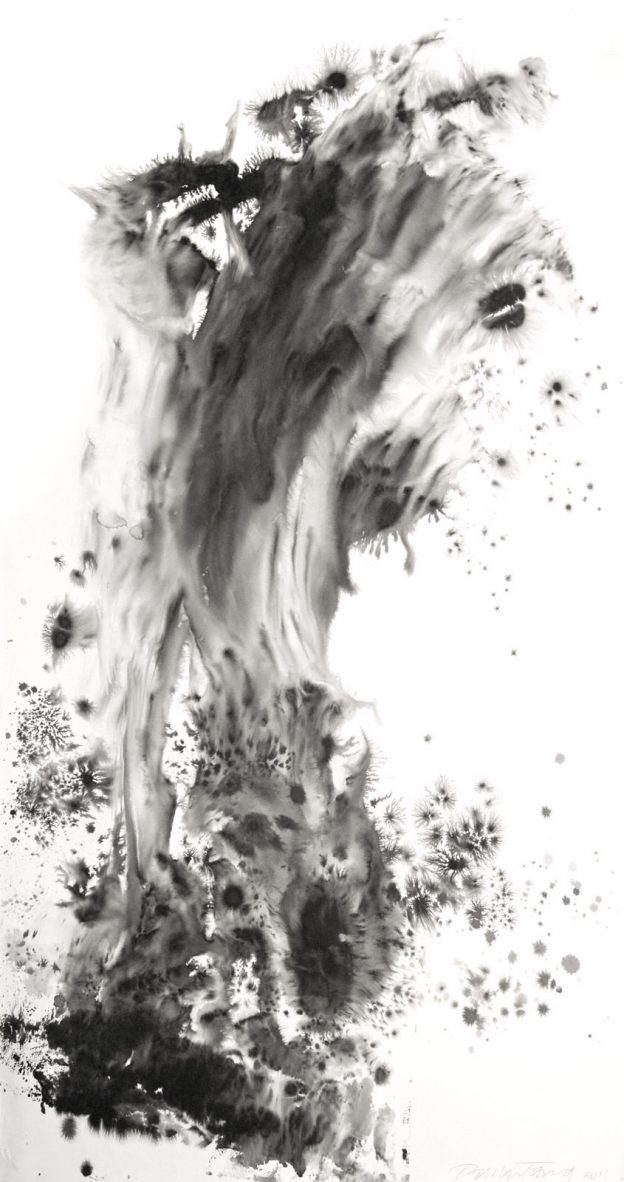
Tang is recognised for his works in sculpture, installation and performance art, his paintings narrate countenances with a spatial sense of ambiguity; demonstrating that Chinese ink painting is more than an archaic medium confined to still-life and landscape. Present in Tang’s ink paintings is a persistent exploration of motion and energy, poignantly and dynamically achieved through transcendence with the mediums of ink, water and paper. The ink in his works bleeds into one another, their varying hues forming intense monochromatic silhouettes that depict a partial and allusive picture of a feeling that the viewer is invited to respond with.
Tang was the recipient of the Visual Arts Award from the Arts Council of Great Britain in 1978, as well as the Artist Award from the Greater London Arts Council in 1983. In 1999, he was awarded the 10th Fukuoka Asian Culture Prize in Arts and Culture.
He has had solo exhibitions at ACME Gallery, London (1978), National Museum Art Gallery, Singapore (1980), Your Mother Gallery, Singapore (2005), Valentine Willie Fine Art, Kuala Lumpur (2006), and Goodman Arts Centre, Singapore (2011). Important performances include Five Days at NAFA and Five Days in Museum, Nanyang Academy of Fine Arts and National Museum, Singapore (1982), They Poach the Rhino, Chop Off His Horn and Make This Drink, National Museum Art Gallery, National University of Singapore, and Singapore Zoo (1989), and Don’t Give Money to the Arts, Singapore Art exhibition and fair (1995). He was a leading organizer of and participant in the Artists Village’s Dancing by the Ponds and Sunrise at the Vegetable Farm, The Time Show—24 Hours Continuous Performance (1989–90). The group and its activities were celebrated in the retrospective The Artists Village: 20 Years On at the Singapore Art Museum (2008).
Tang has participated in group exhibitions including the Asian Art Show, Fukuoka Art Museum, Japan (1989), Art in Asia: Traditions/Tensions, Art Gallery of Western Australia, Perth (1998), Fukuoka Asian Art Triennial (1999), and Singapore Biennial (2006). He was featured in the Singapore Pavilion at the 52nd edition of the Venice Biennale in 2007. More recently in 2014, Tang’s sculpture was presented at the Guggenheim UBS Map Global Art Initiative, curated by Singaporean curator June Yap and exhibited at NTU Centre for Contemporary Arts in Gillman Barracks, Singapore. The work “Our Children, 2012” was acquired by the Guggenheim Museum, New York. Tang currently lives and works between Singapore and London.
Selected Exhibitions and Performances
1970 : Drawings and Paintings, Chinese Chamber of Commerce, Singapore
1972 : Touch Space, Midland Art 72, Dudley Museum, England
1978 : Marks – Black Powder Falling Through Muslin, ACME Gallery, England
1980 : Earthworks, National Museum Art Gallery and Sin Chew Jit Poh Exhibition Centre, Singapore
1982 : Five Days at NAFA; Five Days in Museum, Nanyang Academy of Fine Arts and National Museum, Singapore
1983 : Flying Marks, ALTERNATIVA III Festival of Performance, Portugal
1983 : In Between; Change, 4th Performance Platform, England
1984 : The 1984 Show, Brixton Art Gallery, England
1984 : Every Other Move, Oporto, Portugal
1985 : The Support, Woodland Gallery, England
1985 : Steaming Laundry, Brixton Art Gallery, England
1986 : No Fancy Brushes; New Life, Royal Festival Hall, England
1986 : In The End, My Mother Decided to Eat Dogfood and Catfood, Orchard Road Weekend Art Fair, Singapore
1987 : Four Days at the National Museum Art Gallery, National Museum, Singapore
1988 : In Case of Howard Lui; Incident in a City, Singapore Festival of the Arts Fringe, Singapore
1989 : The Artists Village Show Home Documentation, Art Base Gallery, Singapore
1989 : Gooseman; Open the Gate; Dancing UV; Selling Handicaps; In the End, My Mother Decided to Eat Dogfood and Catfood, The Artists’ Village 2nd Open Studio Show, Singapore
1989 : They Poach the Rhino, Chop Off His Horn and Make this Drink, National Museum Art Gallery, National University of Singapore, Singapore Zoo, Singapore
1989 : The Third Asian Art Show, Fukuoka Art Museum, Japan
1989 – 1990 : Dancing by the Ponds;Sunrise at the Vegetable Farm; The Time Show – 24 Hours Continuous Performance Show, The Artists’ Village, Singapore
1990 : The Death of the Philipino Maid, Stop That Tank One Year Anniversary of June 4th,Noah’s Ark for Plants, Serious Conversations, Festival of the Arts Fringe, Singapore
1990 : T or P? That is the Question, Empress Place Museum, Singapore
1990 – 1999 : North-East Monsoon – A Water Game, Singapore and Others
1991 : Tiger’s Whip, National Museum and Chinatown, Singapore; and Fukuoka Art Museum, Japan
1991 : Four Persons in One Suit, in the Streets of Singapore, A Sculpture Seminar, National Museum, Singapore
1991 : The Ark for Plants, The Substation, Singapore
1991 : Chinese Restaurant II; World’s Number One Pet Shop; Just in Case, National Sculpture Exhibition, National Museum, Singapore
1991 : Switch Off the Lights, Please, The Substation, Singapore
1991 : They Poach the Rhino, Chop Off His Horn and Make This Drink; In the End, My Mother Decided to Eat Dogfood and Catfood; and Tigers Whip, Asian Artist Today – Fukuoka Annual V: Tang Da Wu Exhibition, Fukuoka Art Museum, Japan
1992 : Under The Table All Going One Direction, New Art From Southeast Asia 1992, Tokyo Metropolitan Artspace / Fukuoka Art Museum/ Hiroshima City Museum of Contemporary Art/ Kirin Plaza Osaka, Japan
1993 : And He Returns Home When You Least Expected, 2nd ASEAN Workshop, Exhibition and Symposium on Aesthetics, Philippines
1994 : Sorry Whale I Didn’t Know That You Were In My Camera, Creativity in Asian Art Now, Part 3 Asian Installation Work, Hiroshima City Museum of Contemporary Art, Japan
1994 : Contemporary Shopping, Faret Tachikawa, Japan
1994 – 1995 : Tapioca Friendship Project, Osaka International Peace Centre, Japan and Singapore
1994 : Colours Don’t Help, Artists Against AIDS, Singapore
1995 : Meeting with the Real Chiang Maian, 3rd Chiang Mai Social Installation, Thailand
1995 : I was Born Japanese, Mokosongo, Indonesia
1995 : Don’t Buy Present for Your Mother on Mother’s Day, The Substation, Singapore
1995 : Don’t Give Money To The Arts, Asian International Art Exhibition, National Museum Art Gallery and Singapore Art ’95, Suntec City, Singapore
1996 : One Hand Prayer Project, Hiroshima City Museum of Contemporary Art, Japan
1996 : Life in a Tin; Rubber Road No U-Turn, Malaysia, Singapore and others
1998 : Contemporary Art in Asia: Traditions/Tensions, Art Gallery of Western Australia, Australia
1999 : Don’t Worry Ancestors, Singapore
1999 : Life in a Tin, The First Fukuoka Asian Art Triennale, Fukuoka Asian Art Museum, Japan
2000 : Tapioca Friendship, Kwanju Biennale, Korea
2004 : Satsuma Brilliance, Kirishima Open Air Museum, Japan
2004 : Interakcje, Trybunalski, Poland
2005 : Art Brickfest, Wheelock Place, Singapore
2005 : Situation: Collaborations, collectives and artist networks from Sydney, Singapore and Berlin, Museum of Contemporary Art Sydney, New South Wales
2006 : Tang Da Wu – Heroes, Islanders, Valentine Willie Fine Art, Singapore
2006 : Indonesian International Performance Art Event, Galeri Nasional Indonesia, Jakarta
2006 : Jantung Pisang – Heart of a Tree, Heart of a People, Jendela Visual Arts Space at The Esplanade, Singapore
2007 : Untitled, Singapore Pavilion at the 52nd Venice Biennale International Art Exhibition, Italy
Jin Jie 金捷 was born in 1965 in Jiangsu province, China, he graduated from Oil painting studies in Nanjing University of Arts in 1991, and went on to achieve an M.A. in Western Arts and Lecture in 1997. In 2008, he obtained a Ph.D in Fine Art from his alma mater Nanjing University of Arts in Jiangsu province.
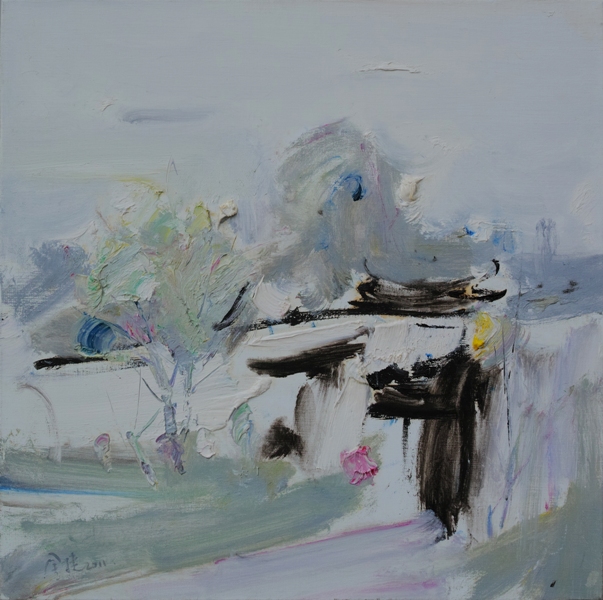
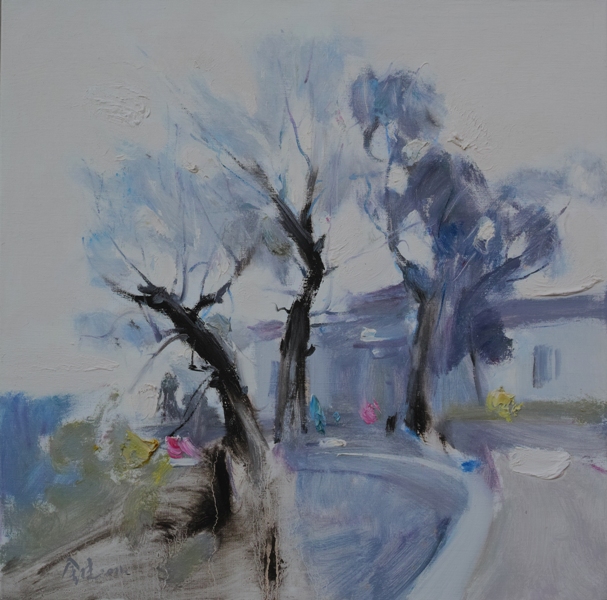
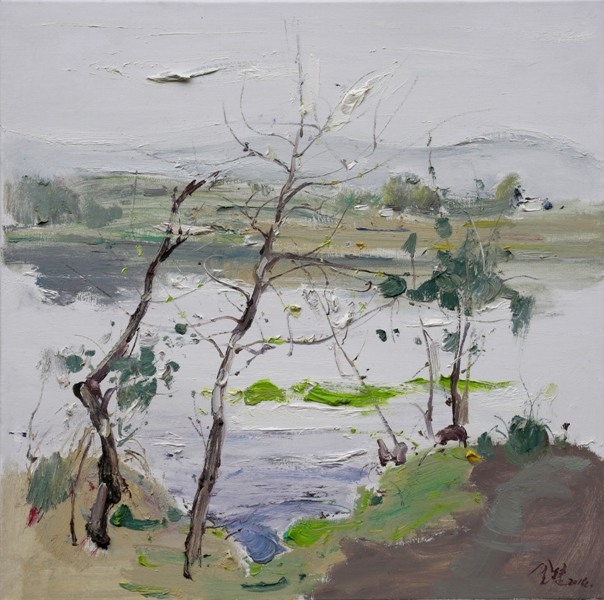
The lyrical nature of Jin Jie’s semi-abstract works is a testament of his mastery of western traditional of oil painting techniques. With over two decades of exploration and development within one of the most competitive art institutions in China, Jin Jie employs inviting colours, notably various shades of grey, black and white, with occasional strokes of colours, to portray the rural landscape of his beloved homeland.
Jin Jie feels a strong affinity to his homeland, a personal and familiar place deeply rooted where his spirit lifts when he encounters her beautiful landscape and scenery. This is evident in his work where we observe generous layers of oil streaked across the canvas, in quick and vigorous strokes, capturing not the minute details but the essence of the place, of the atmospheric qualities of the Jiangsu landscape and also the essence of the artist’s state of mind and his response to the place.
As such, Jin Jie instinctively captures the spirit of Jiangnan style – where the works are poetic rather than political in today’s contemporary art scene. Despite the weighty societal changes occurring in China, the artist has allowed viewers to adopt a unique perspective of his hometown, casting aside the stuffy, industrialized atmosphere that precedes economic development, and drawing attention to the presence of a poetic, tireless cultural code that binds a country with its people.
Jin Jie has exhibited extensively within Jiangsu province and is a member of the prestigious China Artists Association amongst many other notable appointments in China. He continues to live and work in Nanjing.
Education
2008 | Ph.D in Fine Art, Nanjing University of the Arts, Jiangsu, China
1997 | M.A. in Western Arts and Lecture, Nanjing University of the Arts, Jiangsu, China
1991 | B.A. in Oil Painting, Nanjing University of the Arts, Jiangsu, China
Irene Chou 周綠雲 (1924–2011) was a pioneering Hong Kong ink painter and a key figure in the development of the Hong Kong New Ink movement. Through exhibitions and research, iPreciation has presented her work and contributed to the appreciation of her legacy in modern Chinese ink painting.
About Irene Chou
Irene Chou was a pioneering figure in the Hong Kong New Ink Painting movement, transforming traditional Chinese ink painting into a modern and expressive art form. Her bold brushwork and experimental techniques explored the universe, spirituality and human consciousness. Her paintings are recognised for their emotional intensity, philosophical depth and important place within contemporary ink art.
Rotation, 1996, 98x61cm, Ink and Colour on Rice Paper
Work under permanent collection at GIC Brisbane, Australia
Early Life and Education
Born in Shanghai in 1924, Irene Chou graduated from St. John’s University in 1945 with a BA in Economics. She later worked as a journalist before moving to Hong Kong in 1949. There, she studied under the Lingnan School master Zhao Shao’ang and developed a strong foundation in traditional Chinese ink painting.
Chou gradually moved beyond conventional landscape and bird-and-flower subjects in search of a more personal artistic language. Her early training remained important, but she increasingly used ink as a means of expressing inner experience and emotion.
Development of Her Artistic Style
In the 1960s, Chou studied under the influential ink painter Lui Shou-Kwan, whose approach to modernising Chinese ink painting had a profound impact on her practice. She began experimenting with abstraction and exploring the expressive possibilities of ink, colour and gesture.
During the 1970s and 1980s, Chou developed techniques including splash ink, layered textures and her distinctive “one-stroke” method. These approaches combined traditional Chinese aesthetics with modern abstraction and gave her works a strong sense of movement, energy and rhythm.
Artistic Themes and Philosophy
Chou frequently explored the relationship between the human mind and the universe. The phrase “the universe is my mind; my mind is the universe” became closely associated with her artistic philosophy. Her paintings often contain cosmic imagery, flowing brushstrokes and swirling forms that suggest the movement of life and universal energy.
Her work also reflected personal experiences of loss, change and renewal. Through abstraction, Chou created compositions that are both introspective and dynamic, inviting viewers to consider consciousness, existence and the invisible forces that shape human experience.
My First Australian Landscape,1994,152x107cm, 175×130.5cm (Mounted), Ink and Colour on Paper Mounted on Canvas
Universe is in My Mind IV, 1995, 152x106cm, 175x133cm (Mounted), Ink and Colour on Paper Mounted on Canvas
Later Years and Legacy
After suffering a severe stroke in 1991, Chou underwent rehabilitation and eventually returned to painting. She moved to Brisbane, Australia, in 1992 and continued developing her practice there until her passing in 2011.
Her later works often express resilience, renewal and spiritual reflection. Irene Chou’s works are represented in major institutional and private collections internationally, and her practice continues to influence artists and scholars working in modern and contemporary Chinese ink painting.
No. 123, Life is a Many Splendoured Thing, 2007, 30x30cm, Ink, Colour and Acrylic on Paper
Life is a Many Splendoured Thing, 2007, 38x30cm, 58x50cm (with Border), Ink and Colour on Paper
Key Dates
1924 | Born in Shanghai, China
1949 | Moved to Hong Kong
1992 | Moved to Brisbane, Australia
2011 | Passed away
Education
1945 | BA in Economics at St. John’s University, Shanghai
Selected Solo Exhibitions
2021 | As Clouds – Ink Paintings of Irene Chou, iPreciation, Singapore
2019–2020 | Irene Chou Rediscovered: Paintings from the M. K. Lau Collection, Duddell’s, Hong Kong
2019 | A World Within – The Art and Inspiration of Irene Chou, 20th Century Chinese Female Artist Series, Asia Society Hong Kong Centre, Hong Kong
2017 | Irene Chou’s Universe of Ink — Solo Exhibition at Art Basel Hong Kong 2017
2008 | Irene Chou 84, Hanart TZ Gallery, Hong Kong
2008 | Life is a Many Splendoured Thing, iPreciation, Singapore
2007 | Life is a Many Splendoured Thing, The Rotunda, Exchange Square Central by iPreciation, Hong Kong
2006 | Universe of the Mind – Irene Chou a Retrospective Exhibition, University Museum and Art Gallery, University of Hong Kong, Hong Kong
2006 | New Paintings by Irene Chou, Hanart TZ Gallery, Hong Kong
2004 | Irene Chou at Eighty, Hanart TZ Gallery, Hong Kong
2004 | From Representation to Revelation: The Transitional Works (1950-1990) of Irene Chou, Grotto Fine Art, Hong Kong
2004 | The Universe is My Heart – Exhibition by Irene Chou, Pao Galleries, Hong Kong Arts Centre, Hong Kong
2003 | Winter Solstice, iPreciation, Singapore
2003 | My Universe, iPreciation, Singapore
2003 | The Universe is My Heart, My Heart is the Universe, Hong Kong Arts Centre, Hong Kong
2000 | The Universe is My Mind, Hanart TZ Gallery, Hong Kong
1999 | Solo Exhibition, Philip Bacon Gallery, Australia
1998 | Solo Exhibition, Rotunda, Exchange Square, Hong Kong
1997 | Irene Chou Painting Exhibition, (Solo exhibition), Hong Kong Bank Building, Brisbane, Australia
1996 | Ancient Traditions, New Images, Philip Bacon Galleries, Brisbane, Australia
1996 | Works by Irene Chou, Lyric Lounge, Queensland Performing Art Complex, Brisbane
1995 | The Cosmic Vision of Zhou Luyun, Cat Street Galleries, Hong Kong
1994 | The Kenneth and Yasuko Myer Collection of Contemporary Asian Art, Myer Centre, Brisbane
1994 | Solo Exhibition, Taipei Art Museum, Taipei
1991 | Solo Exhibition, Godfrey Far East Art, London
1989 | Solo Exhibition, Hanart TZ Gallery, Hong Kong
1988 | Solo Exhibition, Hanart Gallery, New York
1987 | Solo Exhibition, Leal Senado, Museum Luis de Camoes, Macau
1986 | Solo Exhibition, Fung Ping Shan Museum, University of Hong Kong, Hong Kong
1985 | Solo Exhibition, Charlotte Horstmann and Gerald Godfrey, Hong Kong
1983 | Solo exhibition, City Gallery, Manila
1981 | Solo exhibition, Raya Gallery, Melbourne
1977 | Solo exhibition, Raya Gallery, Melbourne
1976 | Solo exhibition, Quorium Galleries, Hong Kong
1970 | Solo exhibition, US Cultural Centre, Hong Kong
1968 | Solo exhibition, Hong Kong City Hall, Hong Kong
Selected Group Exhibitions
2021 | Art for Everyone at HKMoA, City-wide art campaign, Hong Kong
2020 | UNSCHEDULED, Hong Kong Art Gallery Association, Tai Kwun, Hong Kong
2018 | HOPE A charity exhibition celebrating the works of outstanding contemporary Chinese women artists
2015 | A Legacy of Ink: Lui Shou-kwan 40 Years On, Hong Kong Arts Centre, Alisan Fine Arts, Hong Kong
2013 | Hong Kong Masters, Rossi & Rossi Ltd, London, U.K
2012 | A tribute to Hong Kong Masters, Hanart TZ Gallery, Hong Kong
2010 | De la Chine, entre Tradition et Modernite, Galerie F. Helser, Luxembourg
2008 | Hong Kong Art: Open Dialogue Exhibition Series II – New Ink Art: Innovation and Beyond, curated by Alice King, Hong Kong Museum of Art, Hong Kong
2007 | The Norman W. M Ko Collection of Hong Kong Art, 2007, University Museum and Art Gallery, The University of Hong Kong, Hong Kong
2007 | The New Face of Ink Painting: Modern Ink Painting Group Exhibition, Central Plaza, Hong Kong
2006 | Contemporary Hong Kong Ink Painting Exhibition, Hong Kong Central Library, Hong Kong
2004 | Reconciliation Art Works, Multicultural Community Centre, Brisbane
2002 | Chinese Paintings from the Khoan and Michael Sullivan Collection, Ashmolean Museum, University of Oxford, Oxford, United Kingdom
2002 | Artists in the Neighbourhood Scheme II Launching Exhibition, Hong Kong Central Library, Hong Kong
2002 | Hong Kong Cityscapes – Ink Painting in Transition, Hong Kong Festival, London, United Kingdom
2001 | Multicultural Women’s Business Exhibition, Australia/ In Celebration of Art – Hong Kong Arts Centre 25th Anniversary Exhibition, Hong Kong Arts Centre, Hong Kong
1999 | Sculpting Nature, Hanart TZ Gallery, Hong Kong
1996 | Annandale Art Gallery, Sydney
1995 | Lui Shou-kwan (1919-1975) and His School, Hong Kong Arts Centre, Alisan Fine Arts, Hong Kong
1995 | Lingo – Getting the Picture, Brisbane City Hall, Brisbane, Australia
1994 | Art Asia 1994, Hong Kong International Fine Art Expositions, Hong Kong
1994 | The 25th Anniversary Exhibition of One Art Group, City Hall, Hong Kong
1993 | Inaugural Exhibition of the Asia-Pacific Triennial of Contemporary Art, Queensland Art Gallery, Brisbane
1993 | Art Asia 1993, Hong Kong International Fine Art Expositions, Hong Kong
1992 | Chinese Art 1992, Godfrey Far East Art, London, United Kingdom
1992 | Contemporary Hong Kong Art Biennial, Hong Kong Museum of Art
1991 | Recent Paintings of Irene Chou and Hon Chi-Fun, The Rotunda, Exchange Square, Hong Kong
1991 | Six Contemporary Chinese Women Artists, San Francisco
1991 | Art Works of Hong Kong Women Artists, The Hong Kong Institute for Promotion of Chinese Culture
1990 | Art Works of Hong Kong Women Artists, The Hong Kong Institute for Promotion of Chinese Culture, Hong Kong
1989 | Exhibitions of 19th and 20th Century and Modern Chinese Paintings, Sotheby’s Hong Kong and Christie’s Swire, Hong Kong (to 1993)
1989 | The Fourth Asian International Art Exhibition, Seoul Metropolitan Museum of Art
1989 | Thirteen Well-Known Hong Kong Painters, Nagoya
1988 | The XXII International Prix of Contemporary Art, Monte Carlo, Monaco
1988 | Hong Kong Modern Art, National Art Museum of China, Beijing, China
1988 | Ink Paintings by Hong Kong Artists, Barbican Centre, London, United Kingdom
1987 | Ten Years of Hong Kong Painting, Hong Kong Art Centre, Hong Kong
1987 | Reality & Infinity-with Koo Mei, Alisan Fine Arts, Hong Kong
1986 | University Art Collection Show, Fung Ping Shan Museum, The University of Hong Kong, Hong Kong
1986 | Art’ 86, Hong Kong Museum of Art, Hong Kong
1986 | Hong Kong International Contemporary Ink Paintings, The Chinese University of Hong Kong, Hong Kong
1985 | Contemporary Hong Kong Art Biennial, Hong Kong Museum of Art, Hong Kong
1985 | Foundation Prince Pierre de Monaco Exhibition, Monte-Carlo National Museum, Monaco
1985 | Shui Mo – The New Spirit of Chinese Tradition, Hong Kong Arts Centre, Hong Kong
1984 | Academy Award Winner’s Exhibition, Hong Kong Museum of Art, Hong Kong
1983 | Art 1983, Fung Ping Shan Museum, University of Hong Kong, Hong Kong
1983 | The Experience of Art, Hugh Moss Collection, Hong Kong
1983 | Contemporary Art of the Eighties, Hong Kong Art Centre, Hong Kong
1983 | Woman Artists’ Show, Hong Kong Women’s Art Council, Hong Kong
1982 | Contemporary Art from Hong Kong, Metropolitan Museum of Manila
1982 | Exhibition of International Association of Ink Painters, Taiwan, Singapore, Malaysia, Seoul
1982 | Contemporary Vision of Landscape, Hong Kong Museum of Art, Hong Kong
1981 | Art 1981, Fung Ping Shan Museum, University of Hong Kong, Hong Kong
1981 | Contemporary Art of Chinese Intellectuals, Hong Kong City Hall, Hong Kong
1981 | Inaugural Exhibition, Japan! International Artists Society
1980 | One Art Group Exhibition, National Museum of History, Taipei
1980 | Hong Kong Art, Yolanda Gallery, Chicago
1979 | One Art Group Exhibition, National Museum, Singapore
1979 | New Raya Inaugural Exhibition, Raya Gallery, Melbourne
1979 | Hong Kong Art, Australia
1978 | Art’ 78, Fung Ping Shan Museum, University of Hong Kong, Hong Kong
1978 | One Art Group Show, Hong Kong
1977 | First Choice Hong Kong Exhibition, Hong Kong (annually until 1986)
1977 | Hong Kong Arts Centre Inaugural Exhibition, Hong Kong Arts Centre, Hong Kong
1977 | Women Artists, Hong Kong City Hall, Hong Kong
1977 | Art-The Visual Experience, Hong Kong
1976 | Critics’ Choice, St. John Hall, Hong Kong
1976 | Art’ 76, Fung Ping Shan Museum, University of Hong Kong, Hong Kong
1975 | Cleveland International Drawing Biennial, London
1975 | Contemporary Hong Kong Art, Hong Kong Museum of Art, Hong Kong
1975 | Five Artists Exhibition, National Taiwan Arts Centre, Taiwan
1975 | Hong Kong Artists 1975, St. John’s Hall, Hong Kong
1975 | Hong Kong Painters, Luz Gallery, Manila
1974 | Contemporary Hong Kong Art, Hong Kong Art Festival, Hong Kong
1973 | Chinese Ink Painting, Fung Ping Shan Museum, University of Hong Kong
1973 | Contemporary Hong Kong Art Exhibition, City Hall Museum and Art Gallery, Hong Kong
1973 | Five Contemporary Chinese Artists, Mavis Chapman Gallery, Sydney, Australia
1972 | International Society of Plastic and Audio-Visual Art (ISPAA). Hong Kong, Taiwan, Japan, Korea
1972 | Contemporary Hong Kong Art, Pacificulture Asia Museum, Pasadena, California
1972 | One Art Group, City Hall, Hong Kong
1972 | Art Now Hong Kong, Evansville Museum, Indiana
1971 | Art Now Hong Kong, London, Edinburgh, Bristol, Manchester, United Kingdom
1971 | Contemporary Chinese Ink Painters, Lee Nordness Gallery, New York, United States
1970 | 202nd The Royal Academy Summer Exhibition, The Royal Academy of Arts, London, United Kingdom
1969 | 201st The Royal Academy Summer Exhibition, The Royal Academy of Arts, London, United Kingdom
1969 | Contemporary Hong Kong Art, City Hall Museum and Art Gallery, Hong Kong
1968 | In Tao Art Association, City Hall, Hong Kong
1968 | Contemporary Hong Kong Art, City Museum and Art Gallery, Hong Kong
Awards
1988 | Hong Kong Artists’ Guild Painter of the Year Award
1983 | Urban Council Fine Arts Award for Painting (Chinese Media)
1972 | Pacificulture Asia Museum Fine Art Award
Selected Collections
Ashmolean Museum, University of Oxford, United Kingdom
British Museum, London, United Kingdom
Museum of Fine Arts, Boston, USA
Hong Kong Museum of Art, Hong Kong
The University of Hong Kong, Hong Kong
Chinese The University of Hong Kong, Hong Kong
University Museum and Art Gallery, The University of Hong Kong (formerly known as Fung Ping Shan Museum), Hong Kong
Norman W. M. Ko Collection, Hong Kong
M. K. Lau Collection, Hong Kong
M+, Hong Kong
Queensland Art Gallery, Brisbane, Australia
National Museum of History, Taipei, Taiwan
National Taiwan Museum of Fine Arts, Taichung, Taiwan
National Art Gallery, Manila, Philippines
City Gallery, Manila, Philippines
Raya Gallery, Melbourne, Australia
Hong Kong Land, Hong Kong
For further information about Irene Chou, her exhibitions and collections, please contact the gallery at [email protected].
Further Information
For additional information on Irene Chou and her work, please refer to the following resources:
Copyright iPRECIATION.COM
2026.
All Rights Reserved
We value your privacy
We use cookies to enhance your experience and understand how our website is used. You may accept all cookies, reject non-essential cookies, or customise your preferences at any time.
Essential
Always active
The technical storage or access is strictly necessary for the legitimate purpose of enabling the use of a specific service explicitly requested by the subscriber or user, or for the sole purpose of carrying out the transmission of a communication over an electronic communications network.
Preferences
These cookies allow the website to remember choices you make, such as language or display preferences, to provide a more personalised experience.
Analytics
The technical storage or access that is used exclusively for statistical purposes.The technical storage or access that is used exclusively for anonymous statistical purposes. Without a subpoena, voluntary compliance on the part of your Internet Service Provider, or additional records from a third party, information stored or retrieved for this purpose alone cannot usually be used to identify you.
Marketing
These cookies may be used to deliver relevant content and advertisements, and to measure the effectiveness of our communications.