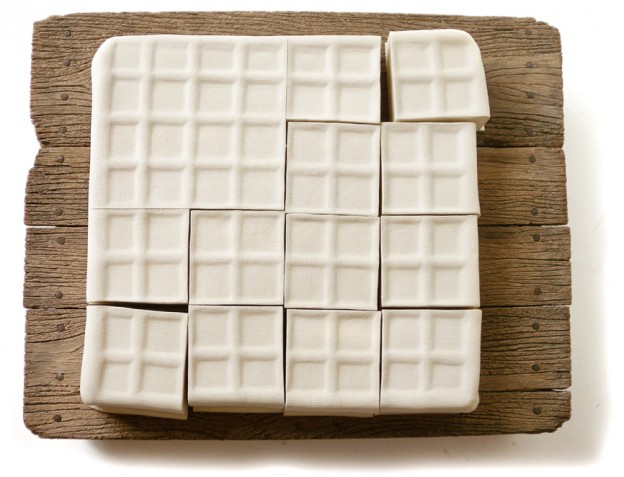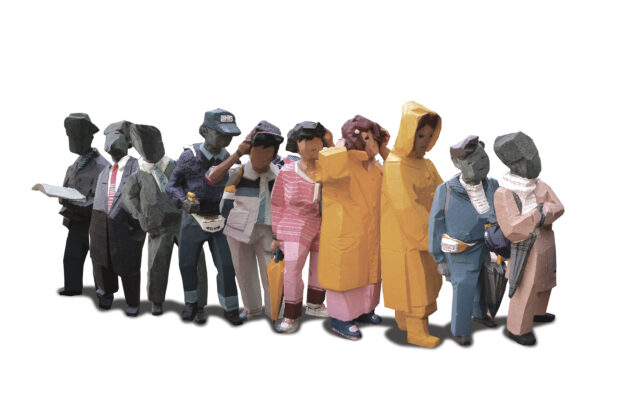
Ju Ming sculptures have been exhibited internationally, including major exhibitions presented by iPreciation in Singapore.
About Ju Ming
Ju Ming was a Taiwanese sculptor known for transforming traditional wood carving into a powerful modern sculptural language. Throughout his career, he experimented with a wide range of materials, including wood, bronze, ceramics, foam, and stainless steel. As a result, his sculptures combine traditional craftsmanship with contemporary artistic expression.
Over time, Ju Ming gained international recognition for his large-scale works and distinctive visual style. Today, his sculptures can be found in museums and public spaces across Asia, Europe, and North America.
Early Life and Apprenticeship
Ju Ming was born in 1938 in Miaoli County, Taiwan. Because his family faced financial hardship, he left school at an early age. At fifteen, he began an apprenticeship with the temple sculptor Lee Chin-chuan.
During this training, he learned traditional wood-carving techniques and developed strong craftsmanship skills. However, Ju Ming soon realized that he wanted to pursue a more personal artistic path. Therefore, he began exploring new approaches to sculpture.
A major turning point came in 1968 when he studied under the modern sculptor Yang Yuyu. Under Yang’s guidance, Ju Ming began to rethink sculpture as a form of contemporary artistic expression. Consequently, his work gradually moved away from traditional craft and toward modern sculpture.
Artistic Development
A major turning point occurred in 1968 when Ju Ming became a student of the modern sculptor Yang Yuyu. Under Yang’s guidance, he learned to think about sculpture in a more contemporary way.
Moreover, Yang encouraged him to express personal emotions and philosophical ideas through form. As a result, Ju Ming began experimenting with abstraction and bold sculptural shapes.
During the 1970s, his work gained significant attention in Taiwan. In fact, his first solo exhibition at the National Museum of History in Taipei in 1976 received widespread praise and helped establish his reputation as a leading sculptor.
Major Sculptural Series
Ju Ming created several important sculptural series that defined his career.
The Taichi Series
In the late 1970s, Ju Ming developed the Taichi Series, which became one of his most iconic bodies of work. The series draws inspiration from the philosophy and movements of Tai Chi.
Through simplified forms and bold gestures, the sculptures capture the balance between motion and stillness. Moreover, Ju Ming reduced the human figure to powerful geometric shapes, emphasizing the spirit rather than realistic detail.
As a result, the Taichi sculptures convey both physical movement and inner energy. This series played a major role in establishing Ju Ming’s international reputation.
The Living World Series
After the success of the Taichi works, Ju Ming turned his attention to everyday life. Consequently, he began developing the Living World Series in the 1980s.
Unlike the spiritual focus of the Taichi sculptures, this series reflects scenes from contemporary society. For example, the sculptures portray people at work, in leisure activities, or interacting with one another.
In addition, Ju Ming used a wide range of materials, including bronze, stone, and stainless steel. Because of this experimentation, the figures appear lively, expressive, and relatable. The series eventually became one of the artist’s most expansive and enduring projects.
International Recognition
From the 1980s onward, Ju Ming gained widespread international recognition. His sculptures were exhibited in major cities such as Paris, London, Tokyo, and New York.
Meanwhile, collectors and institutions increasingly acquired his works. As a result, Ju Ming became widely regarded as one of the most important modern sculptors from Taiwan.
In 2007, he received the prestigious Fukuoka Asian Culture Prize, which recognizes individuals who have made significant contributions to Asian culture.
The Juming Museum
Ju Ming later dedicated much of his energy to creating the Juming Museum in New Taipei City. He personally invested his resources to build the museum and donated thousands of works to its collection.
After more than a decade of development, the museum opened in 1999 as a large outdoor sculpture park. Today, it houses many of his major works and serves as a center for art education and cultural exchange.
Selected Solo Exhibitions
- 2022 | Art: A Human Practice – A Retrospective Exhibition by Ju Ming, iPreciation, Singapore
- 2018 | Ju Ming Living World Series – Ballet, Ju Ming Museum, New Taipei City, Taiwan
- 2017–2018 | Ju Ming Living World Series – A Decade of Wood Sculptures, iPreciation, Singapore
- 2016 | Ju Ming’s Special Art Exhibition, Pingtung Art Museum, Pingtung, Taiwan
- 2015 | Ju Ming’s World of Colours, Taitung Art Museum, Taitung, Taiwan
- 2015 | Ju Ming Travelling Exhibition, Chengdu, Chongqing, Dalian, Shanghai, China
- 2015 | Ju Ming Taichi Series, Monumental Outdoor Exhibition at Singapore Botanic Gardens
- 2014 | Ju Ming – Sculpting the Living World, Hong Kong Museum of Art, Hong Kong
- 2013 | Ju Ming Solo Exhibition, Farglory Financial Center, Taipei, Taiwan
- 2011 | Ju Ming’s Living World Series Swimming & Stone Sculpture
- 2010 | Ju Ming, National Art Museum of China, Beijing, China
- 2010 | Ju Ming Swimming, iPreciation, Hong Kong
- 2009 | Ju Ming Taichi Exhibits, Singapore
- 2008 | Living World Exhibition, Singapore
- 2007 | Meet us at Art Beijing, NAEC, Beijing, China
- 2007 | iPreciation Exhibition, KIAF, Seoul, Korea
- 2006 | Taichi Sculpture Exhibition, National Museum of Art, Beijing, China
- 2006 | Solo Exhibition, National Taiwan Museum of Fine Arts, Taichung, Taiwan
- 2005 | The Living World Series, iPreciation, Singapore
- 2004 | Solo Exhibition, Singapore Art Museum, Singapore
- 2003 | Solo Exhibition, Berlin, Germany
- 2000 | Solo Exhibition, Brussels, Belgium
- 1999 | Solo Exhibition, Luxembourg City, Luxembourg
- 1997 | Solo Exhibition, Vendôme Square, Paris, France
- 1995 | Retrospective Exhibition, Hakone Open-Air Museum, Japan
- 1991 | Solo Exhibition, Museum of Contemporary Art of Dunkerque, France
- 1991 | Solo Exhibition, Yorkshire Sculpture Park, UK
- 1991 | Solo Exhibition, Southbank Centre, London, UK
- 1989 | Solo Exhibition, Singapore
- 1986 | Solo Exhibition, National Museum of Singapore, Singapore
- 1984 | Solo Exhibition, Birashri Institute of Modern Art, Bangkok, Thailand
- 1984 | Solo Exhibition, Ayala Museum, Manila, Philippines
- 1978 | Solo Exhibition, Tokyo Central Museum, Tokyo, Japan
- 1976 | Solo Exhibition, National Museum of History, Taipei, Taiwan
Selected Group Exhibitions
- 2023 | ArtSG – Group Exhibition
- 2019 | Reverie Collection by iPreciation – Group Exhibition
- 2017 | Art New York Art Fair – Group Exhibition
- 2016 | ENVISION – Sculptures @ The Garden City, Singapore
- 2016 | Art Southampton Art Fair – Group Exhibition
- 2015 | Art Paris Art Fair – Group Exhibition
- 2015 | Art Silicon Valley Art Fair – Group Exhibition
Awards
- 2010 | Art Monaco Award for Living World Series
- 2007 | 18th Fukuoka Asian Culture Prize – Art and Culture Prize, Japan
- 2004 | 24th National Cultural Award of the Republic of China
- 2002 | 2nd Enku Grand Award, Gifu, Japan
- 2000 | 4th Tokyo Creative Award conferred to Ju Ming Museum, Japan
- 1998 | Fok Ying Tung Award, Hong Kong
- 1976 | Chinese Literature and Art Award
- 1976 | Ten Outstanding Young Persons Award – Taiwan
- 1967 | Third Prize for Sculpture, Taiwan Provincial Fine Arts Exhibition
- 1966 | Prize of Excellence for Sculpture, Taiwan Provincial Fine Arts Exhibition
Selected Public Collections
- Canada Botanical Gardens, Canada
- St Catherine’s College, Oxford University, UK
- Ashmolean Museum, Oxford University, UK
- University of Cambridge, UK
- Tel Aviv Museum of Art, Israel
- National Museum of Singapore, Singapore
For the full list of exhibitions, art fairs, awards and collections, please contact the gallery at enquiry@ipreciation.com.
Further Information
For further information on Ju Ming and his work, please refer to the following institutional and reference resources:
Institutional Resources
Market and Auction Records
Images of Artworks